Showing posts with label hurricane season. Show all posts

25 August 2016

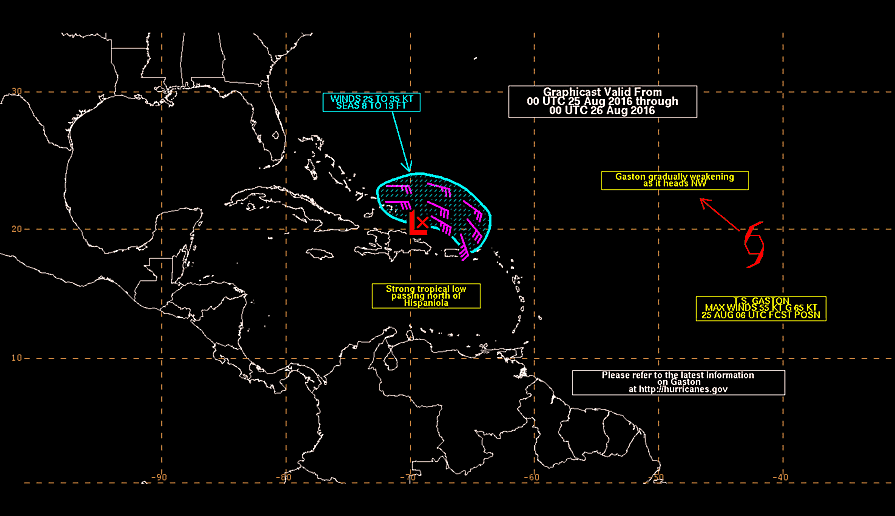
US Coast Guard Tropical Wave Warning To Mariners, Puerto Rico, USVI

UPDATE August 25, 2016: "The Coast Guard set port condition whiskey (pdf) for Port Miami, Miami River, Port Everglades, Port of Palm Beach, Port of Ft. Pierce and all other South Florida terminals and facilities at 4 p.m. Thursday due to the expectation sustained gale force winds generated by Invest 99L may arrive within 72 hours. These ports and facilities are currently open to all commercial traffic and all transfer operations may continue while whiskey remains in effect. Sustained winds between 39 and 54 mph are possible within 72 hours. Mariners are reminded there are no safe havens in these facilities and ports are safest when the inventory of vessels is at a minimum.  All ocean-going commercial vessels and ocean-going barges greater than 500 gross tons should make plans for departing the port. Vessels desiring to remain in port must immediately contact the Captain of the Port, Coast Guard Sector Miami at (305) 535-4472, to receive permission to do so and are required to submit a safe mooring plan in writing.  Vessels bound for South Florida unable to depart 24 hours prior to threatening winds making landfall are advised to seek an alternate destination." Read more hereSee also: Coast Guard urges boaters to prepare for impending severe weather.

Satellite View: GOES-East - IR Rainbow (30 minute updates)

Five-Day Graphical Tropical Weather Outlook
U.S. Coast Guard press release - August 24, 2016 7:32:46 AM PDT: The U.S. Coast Guard advises mariners, recreational boaters, swimmers, surfers and the general public in Puerto Rico and the U.S. Virgin Islands Wednesday to remain vigilant, exercise good judgment and make any preparations in anticipation to an incoming tropical wave.

"We advise citizens and boaters to make preparations and monitor official weather updates as this tropical wave moves through the area," said Capt. Robert Warren, Sector San Juan commander and Captain of the Port San Juan. "Swimmers, recreational boaters and the general public should exercise caution and stay away from shoreline rocks until weather and surf conditions normalize. We will continue to monitor the winds and sea conditions in our area of responsibility."

The Coast Guard requests that the public not call Coast Guard facilities for weather information, but that they listen to weather broadcasts and track internet updates through: 
"Mariners should avoid unnecessary risk and use extreme caution if heading out on the water," said Capt. Megan Dean, Sector Miami Commander. "Remember to remove your EPIRB from your vessel if the vessel will not be in use. EPRIBs left aboard vessels, with no one aboard, often get activated and result in a false alert. False alerts can cause a delay in Coast Guard search and rescue operations."

Here are a few tips to help mariners protect themselves, their families and their vessels:
  • Do not go out to sea in a recreational boat if you know a storm is approaching.
  • Contact local marinas to ask for advice about securing your vessel.
  • Marina operators are knowledgeable and can advise you on the best methods for securing your boat.
  • Take action now. The effects of a storm can be felt well in advance, and bridge schedules can and often shift from their normal operating schedule. Check with local authorities before entering any storm-damaged area.
  • When removing your EPIRB from your vessel, ensure it does not inadvertently activate which could signal a false alert. Furthermore, once the severe weather has passed, mariners are reminded to ensure the EPIRB devices are placed back on their vessels prior to the vessel's next use.
  • Do not rush to your boat. Boaters should not place themselves in danger to get to a boat.
  • Do not try to board a partially sunken boat. Seek salvage assistance from a professional. Storms move quickly and are unpredictable.
See also:

more about sailing below (@ web version link below for mobile)

15 June 2016

2016 Atlantic Hurricane Season, NOAA Outlook, Preparedness (videos)

NOAA's 2016 Atlantic Hurricane Season Outlook

Dr. Gerry Bell of NOAA discusses the 2016 Atlantic Hurricane Season Outlook (published May 27, 2016). Learn more about how to prepare for the 2016 hurricane season, and monitor hurricane forecasts throughout the season, from June 1 through November 30:
http://www.nws.noaa.gov/com/weatherre...
http://www.nws.noaa.gov/om/hurricane/
http://www.nhc.noaa.gov/


"NOAA’s Climate Prediction Center says the 2016 Atlantic hurricane season, which runs from June 1 through November 30, will most likely be near-normal, but forecast uncertainty in the climate signals that influence the formation of Atlantic storms make predicting this season particularly difficult.

"NOAA predicts a 70 percent likelihood of 10 to 16 named storms (winds of 39 mph or higher), of which 4 to 8 could become hurricanes (winds of 74 mph or higher), including 1 to 4 major hurricanes (Category 3, 4 or 5; winds of 111 mph or higher). While a near-normal season is most likely with a 45 percent chance, there is also a 30 percent chance of an above-normal season and a 25 percent chance of a below-normal season. Included in today’s outlook is Hurricane Alex, a pre-season storm that formed over the far eastern Atlantic in January.

“This is a more challenging hurricane season outlook than most because it’s difficult to determine whether there will be reinforcing or competing climate influences on tropical storm development,” said Gerry Bell, Ph.D., lead seasonal hurricane forecaster with NOAA’s Climate Prediction Center. "However, a near-normal prediction for this season suggests we could see more hurricane activity than we’ve seen in the last three years, which were below normal.” Read more here.

Saffir–Simpson Hurricane Wind Scale and Storms Index:
  • Five  ≥137 knots, ≥157 mph, ≥252 km/h
  • Four  113–136 knots, 130–156 mph, 209–251 km/h
  • Three  96–112 knots, 111–129 mph, 178–208 km/h
  • Two  83–95 knots, 96–110 mph, 154–177 km/h
  • One  64–82 knots, 74–95 mph, 119–153 km/h
  • Tropical storm  34–63 knots, 39–73 mph, 63–118 km/h
  • Tropical depression  ≤33 knots, ≤38 mph, ≤62 km/h
West Marine video: Preparing Your Boat for a Hurricane

For more info: http://www.westmarine.com/hurricane-prep-page

BoatUS Hurricane Tracking & Resource Center:
Hurricane Preparedness, General Information:
Here are a few tips to help prepare for the 2016 hurricane season, which officially began June 1 and ends November 30:
  • Know your area and the evacuation routes. In Florida, they are available on the Florida Division of Emergency Management’s Website.
  • Have a plan to prepare your home and/or business with storm shutters or plywood. Bring items that could be picked up by the wind and break windows - like lawn furniture, toys, or trash cans - inside.
  • Make sure you know where your home’s safe room is located. Federal Emergency Management Agency’s (FEMA) website details what a safe room should look like.
  • Keep your automobile fully fueled; if electric power is cut off, gas stations may not be able to operate pumps for several days.
  • Be prepared to survive on your own for a few days. Assemble a disaster kit with a battery-powered radio, flashlights, extra batteries, a first-aid kit, blankets, clothing, food, water, and prescription medications and needed medical supplies. The Florida Division of Emergency Management points you to a good list of items to have ready.
  • Know how to shut off utilities. Know where gas pilots are located and how the heating and air-conditioning system works. If you have any questions, contact your local utility company.
  • Gather your personal documents - insurance policy information, emergency contact information, and any other vital documents - somewhere they can be easily located and ready to take with you should you have to evacuate your home.

more about sailing below (@ web version link below for mobile)

Caribbean Safety and Security Net

sailing - Google News

America's Cup - Google News

More Sailing News

ISAF sailing - Google News

Rolex sailing - Google News

US sailing - Google News

Sydney to Hobart Yacht Race - Google News

Vendee Globe - Google News